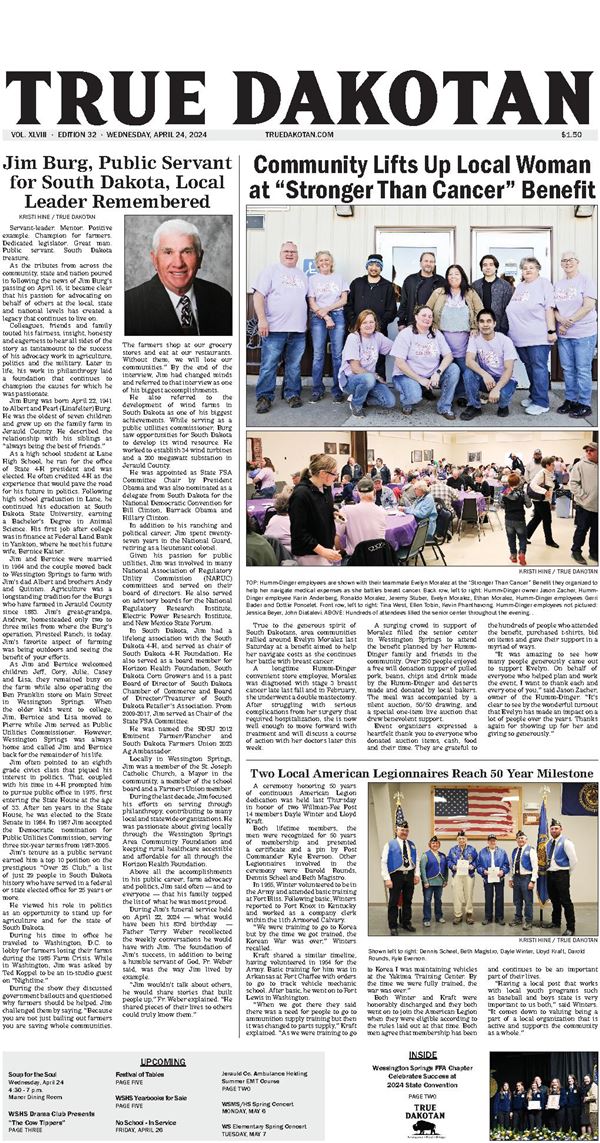


For best outcome in emergencies, call 911, not first responder cell phones
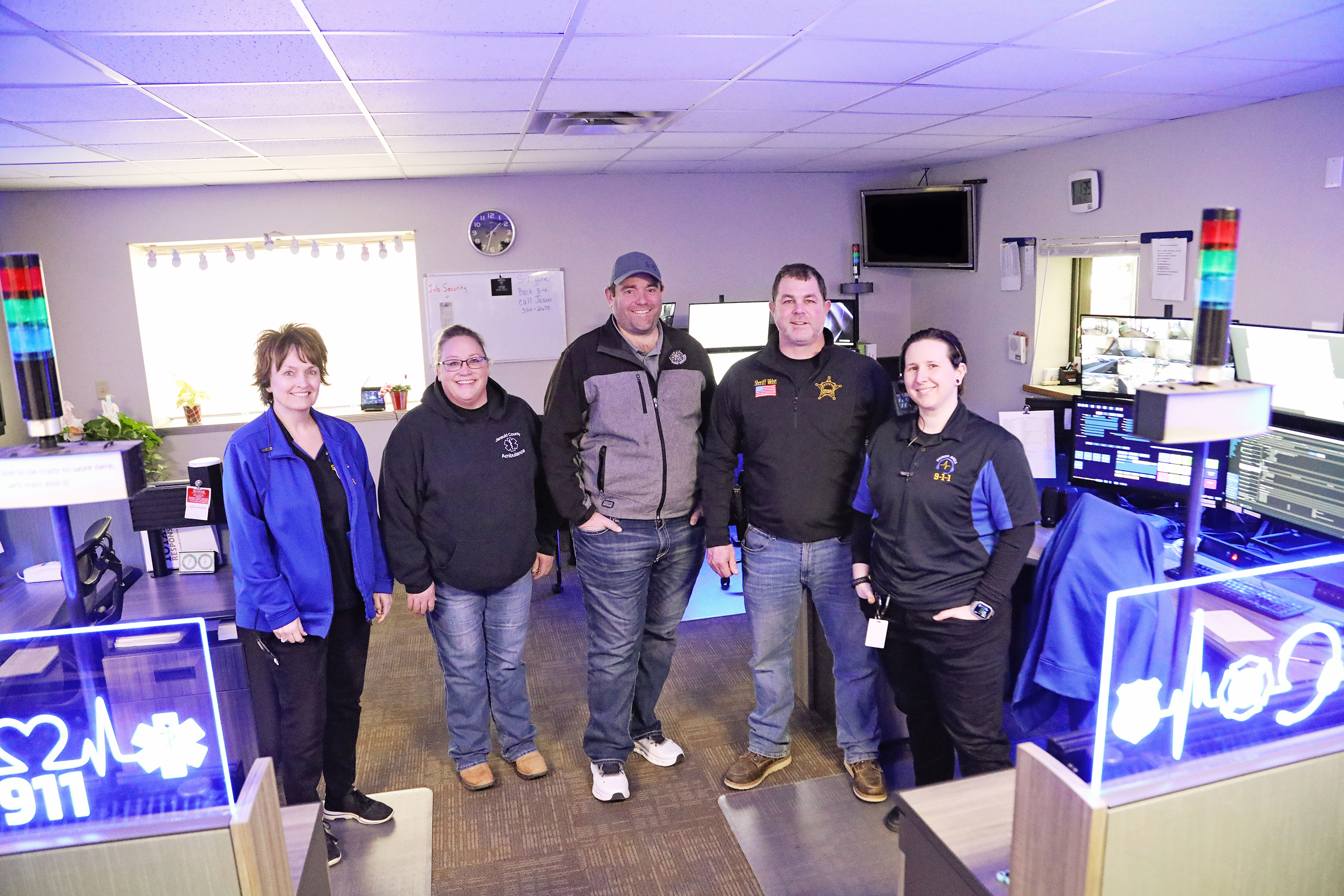

Every second counts when it comes to positive outcomes during emergencies and first responders in Jerauld County strive for quick, high quality responses to each and every call. But an alarming trend that could potentially lead to disaster has risen sharply this year: calling first responder cell phones in lieu of 911.
“People might think it’s quicker to call one of us directly but it is wasted time, a wasted step,” said Jerauld County Sheriff’s Deputy Mike Krueger. “When people call 911, it goes to the dispatch center. They have capabilities to dispatch the proper first responders for exactly what is needed for the situation. When we are on call, or at home sleeping, if they call us directly there is more room for error. Those wasted minutes could be the difference between life and death.”
Jerauld County Sheriff Jason Weber said that hands down, calling 911 is the most important — and efficient — step anyone can take during an emergency.
“When community members call law enforcement, fire or ambulance personnel directly instead of calling 911, they take a gamble that the emergency responder they’re trying to reach is off duty, out of range or even out of town,”Weber said.“A call to 911 is the safest, most efficient way to handle an emergency situation and dispatch the appropriate emergency personnel. If I’m busy and the only one on duty, say I’m on a traffic stop or a medical call, I might not answer my cell phone. On the other hand, when calling dispatch, it goes to our radios and we hear it right away. The radio is on your person all the time.”
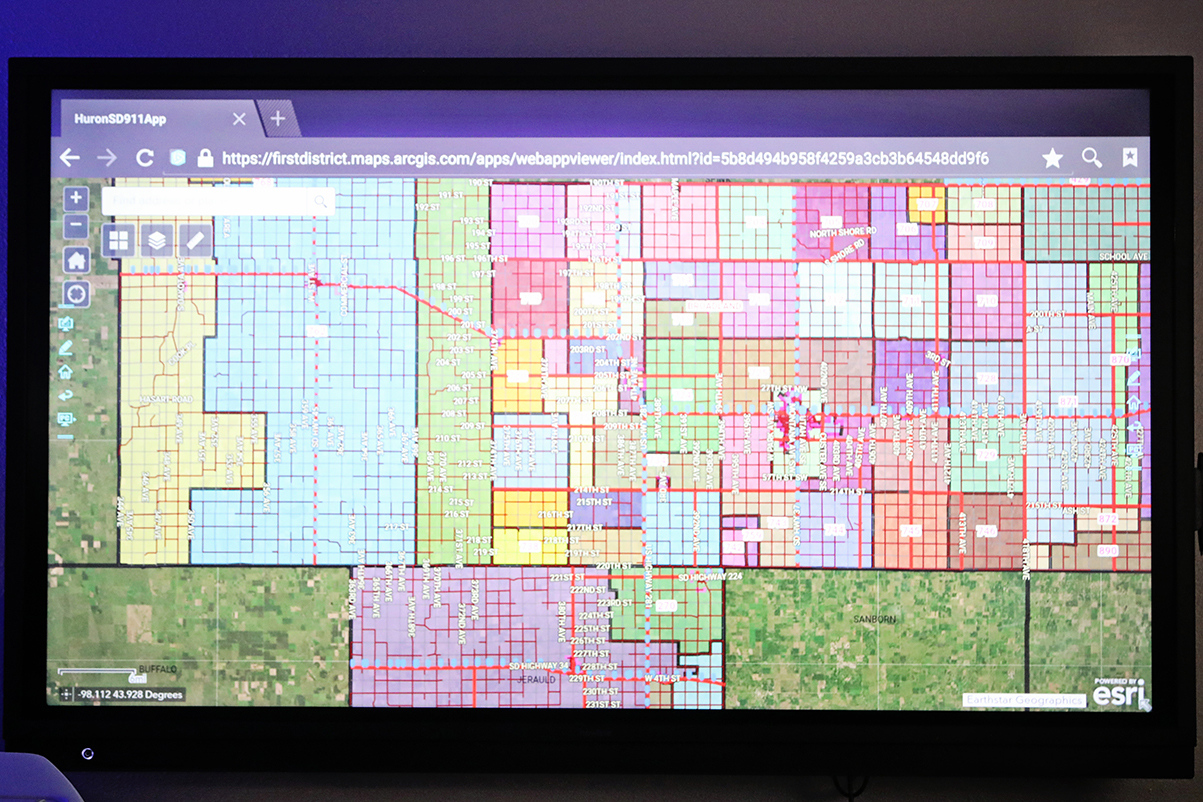
Huron dispatch, located at the Huron Police Department, staffs nine dispatchers who work 12 hour shifts. Their sophisticated computer aided tools include GPS maps of all on-duty officers across four counties, the capability to run license plates in real time, drop down menu scripts for nearly any type of emergency one could imagine and much more.
Krueger added that dispatch is akin to having an additional first responder on scene.
“Dispatch can stay on that 911 line and relay info back to all first responders in real time as we are getting to the scene,” Krueger added. “It helps us tremendously. They can call all responders at the same time, all at once. The bottom line is dispatch helps us help you.”
Jerauld County Ambulance Director Deb Fastnacht echoes the time-saving sentiment shared by Deputy Krueger and Sheriff Weber.
“They can be talking to us while they are on the phone with the reporting party. One of the major things we benefit from is all the information gathered by dispatch from the caller on scene,” Fastnacht shared. “Situations are fluid quite often. If the caller can stay on the phone with dispatch while we are in route, then dispatch can update us the whole way.”
Fastnacht gave examples of the wide variety of medical situations they encounter.
“Dispatch might say, ‘OK the patient was unconscious’ or ‘CPR is in progress.’ It helps us prepare mentally and also as far as what equipment we need to bring in from the ambulance,” she explained. “Time is life — minutes matter. If we can go into the situation with exactly what we need to help, it absolutely could be the difference between a positive and negative outcome.” Fastnacht continued to spell out the time-saving aspect of calling 911.
“If someone calls a deputy first with the emergency call, then the deputy has to get off the phone with the caller, pick up the phone and call 911 dispatch themselves. Only until it goes through dispatch do the other first responders pick up on the radio,” she said. 'We can also ask dispatch questions to ask the reporting party and have that communication as we are getting to the scene.”
Wessington Springs Fire Chief Eric Schroeder and Alpena Fire Chief Ryder Schweitzer expressed the need to know the big picture when responding to emergencies.
“When a person calls 911, dispatch has a huge toolbox to help the caller through the situation. Tools like drop down menus with a bank of questions for every emergency. The questions lead them through each step. That could get missed if they’re calling a first responder directly on a cell phone,” Schroeder said.
Schweitzer points to an additional benefit of calling dispatch: real time GPS coordinates of the caller’s location.
“When you call 911, your phone throws out GPS coordinates. It can find you within 15 feet of your location and can ping it precisely. If you’re moving, it tracks you where you’re going,” he explained.
From the sheriff’s office to ambulance service and fire departments, all Jerauld County first responders shared that dispatch has a wealth of resources that individuals don’t have on their cell phones, all designed to achieve the goal of getting help to those who need it in the quickest and most efficient manner.
“The 911 system is structured to dispatch the proper emergency personnel for the situation,” said Weber. “With most emergencies, response time is key for a positive outcome and the 911 dispatch system – not first responder cell phones – is the most efficient way to handle an emergency.”
When should I call 911?
An emergency is any situation that requires immediate assistance from the police, fire department or ambulance. Examples include:
• A fire
• A crime, especially if in progress
• A car crash, especially if someone is injured
• A medical emergency, such as someone who is unconscious, gasping for air or not breathing, experiencing an allergic reaction, having chest pain, having uncontrollable bleeding, or any other symptoms that require immediate medical attention.
Officials also remind community members that when calling 911, be prepared to answer the calltaker’s questions, which may include:
• The location of the emergency, including the street address
• The nature of the emergency
• Details about the emergency, such as a physical description of a person who may have committed a crime, a description of any fire that may be burning, or a description of injuries or symptoms being experienced by a person having a medical emergency.
Officials point out that non- emergency situations that call for first responders may also arise.
What is a “nonemergency” and what number do I dial?
In the case of a nonemergency situation that doesn’t pertain to a lifethreatening circumstance, residents are encouraged to call the Jerauld County Sheriff's Office. A nonemergency could be a loud music complaint, a barking dog, a suspicious person, a property damage accident, vandalism (when suspect is gone) or cars blocking the street or alleys. The number to dial in a non-emergency is (605)-539-1311.
Jerauld County first responders have many names for the team at Huron dispatch: “unsung heroes,” “Behind-the-scene directors,” “Cool, calm and collected.”
“We are all on the same team but have different roles in each situation,” Fastnacht added. “We want to honor dispatchers. They don’t get enough credit and have to direct everything. Dispatch helps us sort it out for the best possible outcome.”