

Trucks traveling one of Jerauld County’s major eastwest routes will need to slow down following action by the Jerauld County Commission.
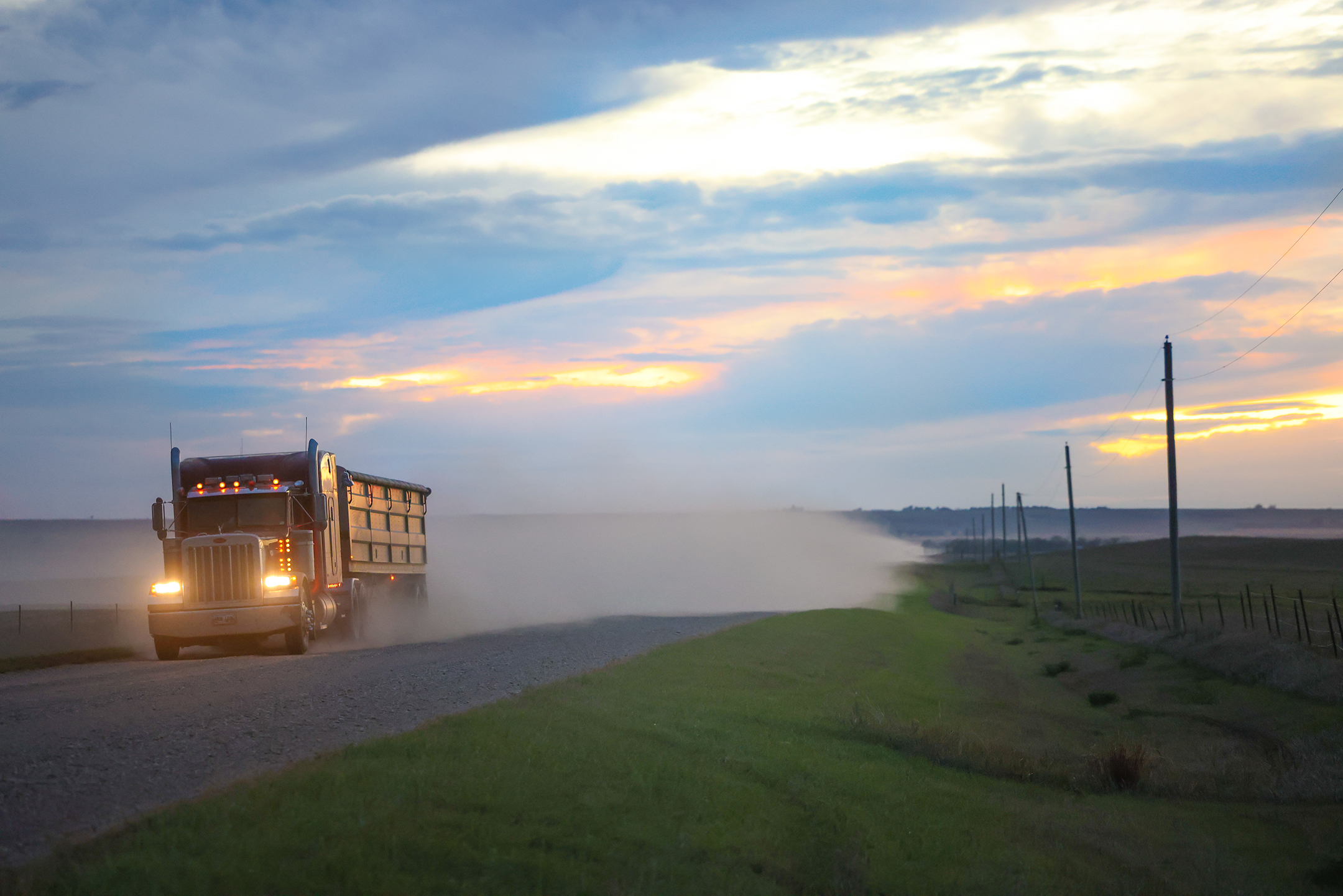
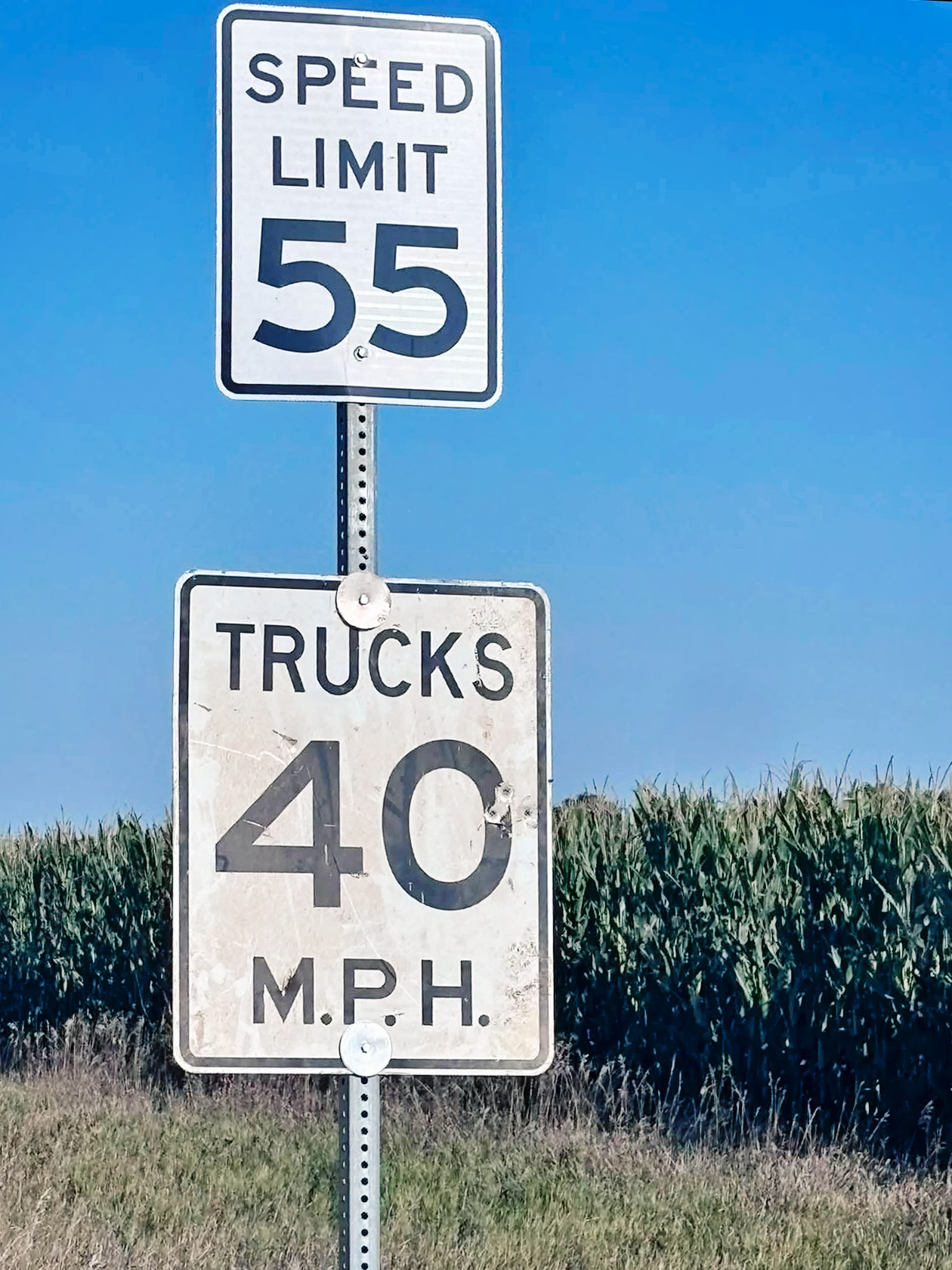
Commissioners voted at their September meeting to establish a 40 mph speed limit for trucks on 221st Street, a heavily traveled route that runs from the Hand County line across Jerauld County and into Alpena, where trucks hauling grain converge on the local elevator.
Interim Highway Superintendent Walt Hein brought the change to commissioners, citing traffic incidents along the road during busy times of the year. Commissioners unanimously approved posting 40 mph speed limit signs as soon as possible.
Jerauld County Sheriff Jason Weber was consulted about the change and said his office will enforce the new speed limit.
The change comes at a particularly timely point, as harvest activity begins bringing more combines, tractors, grain carts and trucks onto rural roads throughout the county.
For motorists, Weber said one of the biggest dangers occurs when drivers become impatient behind slow-moving farm machinery and attempt to pass without realizing the equipment operator is preparing to turn.
“One of the things to always remember when traveling on rural roads is to give machinery plenty of room on the road and do not pass at an intersection,” Weber said. “I have responded to many accidents where a tractor was traveling at a slow speed with intentions of turning and then the passing car causes a collision.”
Large equipment may also need to move toward the right side of the road before making a wide left-hand turn. Motorists should not assume that movement means the equipment operator is inviting them to pass.
“My biggest safety message during harvest is to slow down, be courteous of slow moving equipment and follow speed limits,” Weber said.
That message takes on additional significance along 221st Street this fall, where motorists will encounter both the new 40 mph speed limit and increased grain traffic headed toward Alpena.
Different conditions, same need for caution
Unlike particularly dry harvest seasons when blowing dust can quickly reduce visibility, wetter conditions can present a different set of challenges on rural roads.
Mud tracked from fields can create slick spots on roadways, while wet or soft shoulders may leave less room for motorists and machinery to safely move over. Fog, rain and increasingly shorter daylight hours can also affect visibility.
Harvest windows can mean long days for farmers trying to get crops out when field conditions allow, increasing the importance of patience from everyone sharing rural roads.
Harvest road safety reminders
Motorists should slow down as soon as they see farm machinery ahead and leave plenty of following distance. Drivers should never pass in a no-passing zone, near the crest of a hill, on a curve or at an intersection.
Drivers should watch equipment turn signals carefully and remember that a tractor, combine or other piece of machinery may be turning into a field approach rather than another roadway.
Wet pavement, mud and debris on rural roads can require additional stopping distance, and motorists should adjust their speed accordingly.
Farm equipment operators can do their part by making sure Slow Moving Vehicle emblems are bright, clean and visible and by frequently checking lights, flashers and turn signals.
Operators should signal well in advance of turns, particularly when they must first move toward the right side of the road to negotiate a wide left-hand turn. Extra caution should also be used when moving equipment around dawn, dusk or during other periods of reduced visibility.
Above all, Weber said patience is important during a season when both farmers and motorists may be in a hurry.
“Stress on farmers and travelers reduces decisionmaking skills, which could put everyone at risk,” Weber said. “Plan on longer times to get to your destination and be patient while traveling there.”