

Building connections matters most to women in SD ag
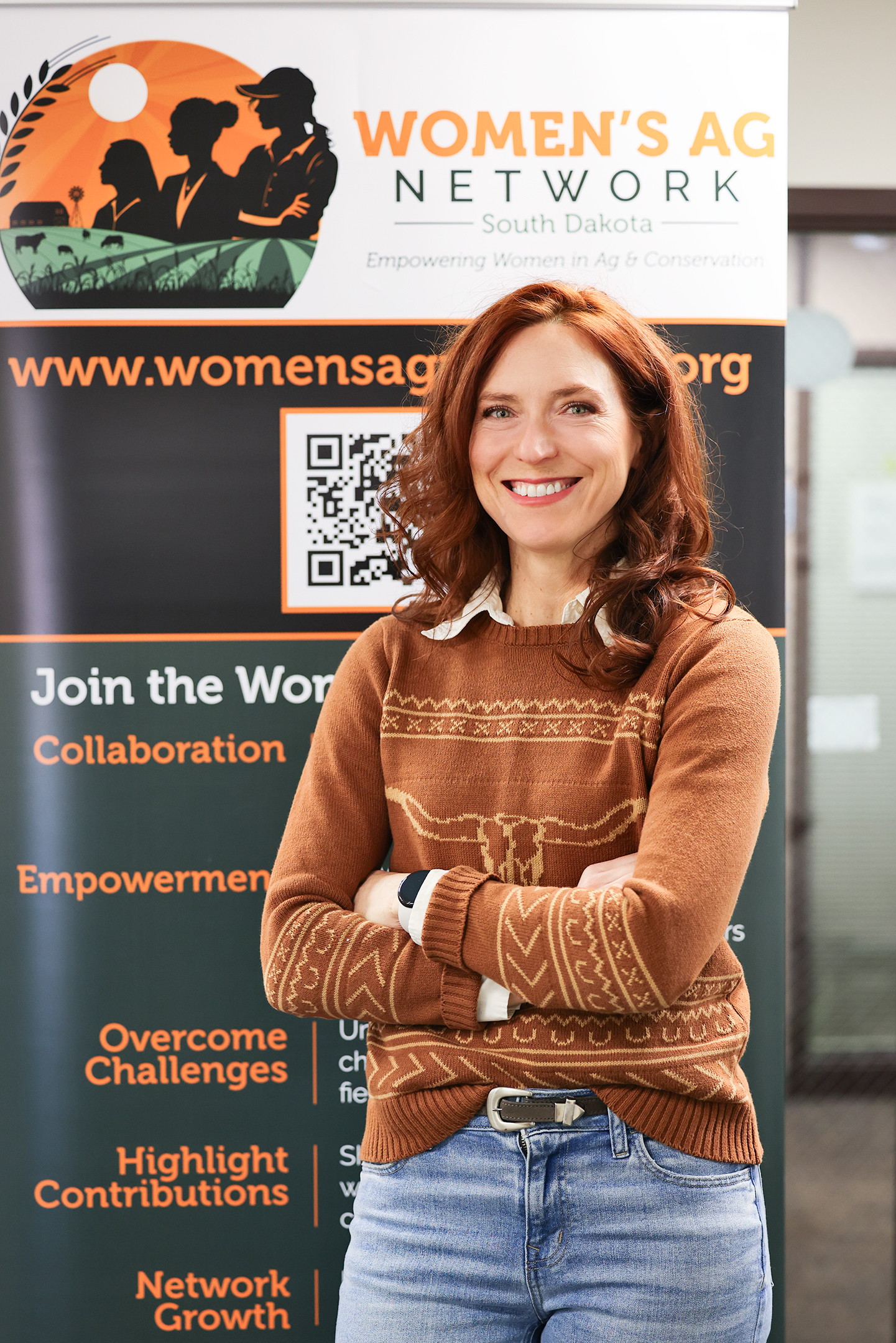
When Rebecca Blue first began asking South Dakota women in agriculture what they were missing, the answers felt familiar.
Connection. Community. A sense that they weren’t navigating their careers and livelihoods alone.
What Blue didn’t know at the time was whether those instincts were widely shared, or whether they reflected only her own experience.
Now, after a year of statewide data collection, the answer is clear. Women across South Dakota overwhelmingly said they want the same thing Blue was searching for: meaningful relationships, peer support and networks that help them grow into leadership.
“To see the data come back and confirm that connection and relationships rose to the top, that was powerful,” Blue said.
That confirmation comes from one of the most comprehensive research efforts focused on women in agriculture ever undertaken in the state that will guide the first full year of the Women’s Ag Network.
In 2023, using her personal savings, Blue launched “The Best Job in South Dakota” podcast featuring women working in agriculture and related fields across the state. As the interviews accumulated, a pattern emerged.
“I went out on my own and realized I was not alone,” Blue said. “There were all these women going through the same thing.”
In June 2024, the Natural Resources Conservation Service, the Jones County Conservation District and the South Dakota Association of Conservation Districts finalized a $1.17 million agreement to support a statewide effort to connect, engage and educate women in agriculture and conservation.
The Women’s Ag Network formally launched in August 2024 at Dakotafest in Mitchell, where Blue and her team introduced the concept alongside a QR-code survey designed to gather input from women working across agriculture, conservation and related industries. At the time, the idea was still taking shape.
Since then, the network has gathered responses from more than 400 women statewide, conducted focus groups with more than 100 participants and contracted with the Sioux Falls marketing firm Paulsen for professional analysis.
Women’s Ag Network also layered in a second, independent review through a semester-long collaboration with University of South Dakota students in the Coyote Business Consulting program.
Together, the findings offer both validation and direction.
“This wasn’t about confirming what we already believed,” Blue said. “It was about meeting women where they are and letting the data steer what comes next.”
What emerged was a portrait of a highly educated, deeply engaged group of women, many of whom found their way into agriculture through nontraditional paths.
Blue pointed to the women managing farm finances, coordinating with lenders and crop insurance agents, raising families and working alongside spouses or partners on operations.
“They’re the executive director of the farm,” she pointed out. “They just don’t give themselves the title.”
Others work in engineering, finance, tax preparation or technical fields that intersect with agriculture.
“In South Dakota, you’re hardpressed to find an industry that doesn’t touch ag in some way,” Blue said.
Networking and relationshipbuilding ranked as the top priority statewide, surpassing technical training, leadership workshops and formal presentations.
Time and confidence ranked as the top barriers to advancement, followed by cost and access. Gender bias ranked lowest.
“That was actually encouraging,” Blue said. “Time and confidence are things we can work on.”
The effort is moving into implementation through a series of regional hubs, each led by a local hub manager selected for their ties to agriculture, leadership experience and deep community connections.
While the network launches with a shared framework, Blue said each hub is expected to evolve based on regional input.
“What works in Spearfish may not work in Eagle Butte,” she said.
Early events will emphasize structured networking, a response to widespread feedback that unstructured introductions are intimidating.
The plan is to meet monthly, creating consistency that many women said has been missing from other professional programs.
The first hub event is scheduled for 5 p.m. Wednesday, Feb. 25, at Corner Post in Huron.
“What women need in one community isn’t always the same as in another,” Blue said. “This network gives us a way to honor those differences without losing the collaboration and support of a statewide connection.”
This story was produced by South Dakota News Watch, an independent, nonprofit organization. Read more stories and donate at sdnewswatch.org and sign up for an email to get stories when they’re published. Contact: info@sdnewswatch.org.