

Farm-to-Table Program Takes Root in Wolsey-Wessington School District

New greenhouse, local donations and hands-on learning are transforming how students understand food
Fresh watermelon and Wolsey-raised beef are showing up on lunch trays in the Wolsey-Wessington School District.
Now, with a newly awarded $15,000 grant from Farm Credit Services of America, the district is preparing to take its growing farm-to-table program even further with the addition of a student-built greenhouse.
The program, launched at the start of the 2025–26 school year, is designed to connect students with the food they eat, while improving nutrition, supporting local producers and creating hands-on learning opportunities both in and out of the classroom.
Superintendent Riley Donovan said the grant, which has been matched by the school, will fund construction of a greenhouse on the north side of the old gym. The project will be built by students.
“We’re going to have the shop class build it as a spring project,” Donovan said. “Kids will be able to plant food, watch it grow and then actually eat what they produce.”
He said the goal is simple but meaningful.
“Healthy, hometown-fed meals,” he said. “We’re trying to give kids good food that fills them up and something they enjoy coming to school for.”
The program has already seen strong support from local producers and businesses.
Donations have included beef, butter, honey and fresh produce, along with locally sourced turkey and seasonal items like green beans, tomatoes, zucchini and watermelon.
School board member Teri Eichstadt, who helped spearhead the program, said the idea grew from both personal experience and concern about nutrition.
“We hear ‘support local’ all the time,” she said. “We’re just trying to live it.”
Eichstadt, a nurse and rancher, said she was struck by how disconnected many people are from their food sources.
“People don’t know where their food comes from,” she said. “And here we are, surrounded by it.”
She also questioned the quality of traditional school meals.
“We grow some of the best protein right here: beef, pork, turkey,” she said. “But we’re bringing in processed food from who knows where. It just didn’t make sense.”
The program goes beyond what’s served on the plate. Students are learning where food comes from, how it’s grown and how it can be prepared in different ways, from hamburger patties to casseroles.
For Donovan, the program is about more than nutrition, he sees opportunity.
“Not every kid is going to college,” he said. “Some are going to take different paths and some might go back to the farm. This gives them something they can connect with and maybe even discover something they love.” Understanding where food comes from and why it matters was reinforced during a recent trip, where Eichstadt said she encountered many people from the east coast who had little understanding of agriculture.
“People didn’t know what a soybean was. They didn’t understand cattle or where their food comes from,” she said. “And here we are, surrounded by it.”
In a community rooted in farming and livestock production, Eichstadt saw an opportunity to bridge that gap, starting with students.
Teaching More Than Nutrition
Eichstadt said the program is also driven by a passion for improving nutrition and long-term health.
“I’ve seen how people struggle, and how kids don’t always know what a good home-cooked meal is,” she said. “This is a place where we can teach that.”
As locally sourced foods are introduced into school meals, students are also learning about the nutritional value behind them, along with the differences between fresh, whole foods and more processed options.
“We’re trying to highlight where food comes from, how it’s used and why it matters,” Eichstadt said. “Food is medicine.”
She added that early education is especially important as health concerns such as diabetes become more common at younger ages.
From Local Producers to the Lunchroom
Since the program began, the district has incorporated a wide range of locally sourced foods into its meals.
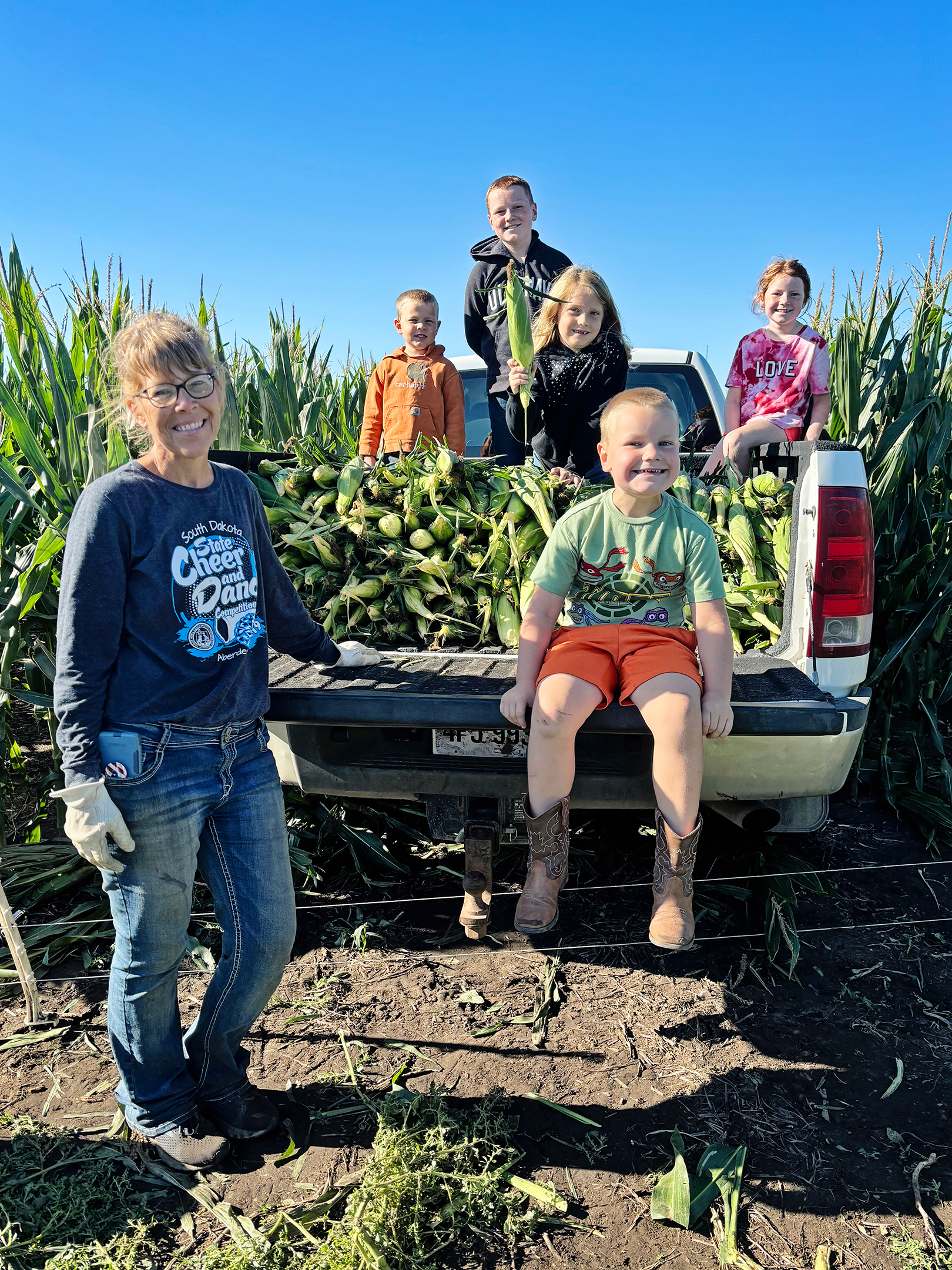
Donations have included fresh produce such as green beans, tomatoes and zucchini, along with Forestburg watermelons served to students early in the school year.
Local beef has also played a key role, with several animals processed for use in school meals. In addition to donated beef, the district has used its nutrition budget to purchase locally raised meat rather than relying solely on pre-packaged products.
Other contributions have included honey from Dakota Honey Company in Winner, which was served to students on the first day of school, and locally sourced turkey products from the Huron area.
“We’re making choices about where we spend our money,” Eichstadt said. “Are we buying off a truck, or are we buying from someone right here in our community?”
Learning by Doing
While the food itself is important, both Eichstadt and Superintendent Riley Donovan said the long-term goal is to create hands-on learning opportunities for students.
Plans for the new greenhouse will play a key role in that effort.
Students will be involved in building the structure through the school’s shop program and will also take part in planting, growing and eventually harvesting food.
“We want kids getting their hands in the dirt,” Eichstadt said. “Learning by doing.”
The district is also working with community members who have expertise in gardening and agriculture, including local residents who have offered guidance as the program develops.
In addition, school representatives visited a nearby colony to learn more about food storage and sustainability practices.
A Community Effort
Both school leaders emphasized that the program has been made possible through strong community support.
Donations have come from local producers, businesses and individuals who want to see the program succeed. At the same time, the district continues to allocate funds within its nutrition budget to support local purchasing.
“We don’t want this to feel like it’s only donation-based,” Eichstadt said. “There is a budget there, we’re just being intentional about how we use it.”
Looking Ahead
As the farm-to-table program continues to grow, school leaders see it as more than just a change in the lunchroom.
It’s an opportunity to connect students to their community, introduce them to new skills and provide a deeper understanding of the role agriculture plays in everyday life.
In a district surrounded by farms and feedlots, Eichstadt said the goal is to make sure students not only benefit from that environment, but understand it.
“We have it right here,” she said. “Why not use it to teach our kids something meaningful?”