

A documentary celebrating 100 years of FFA in South Dakota is now in production, and the idea for the project began in Wessington Springs.
Filmmaker Zeke Hanson and agricultural journalist Lura Roti visited Wessington Springs earlier this year to film scenes for the upcoming documentary, which is expected to premiere at the South Dakota FFA Convention in 2028.
The project traces its origins to Wessington Springs High School agriculture instructor Brady Duxbury, whose suggestion helped spark the effort to tell the statewide story of FFA.
Roti, who is serving as writer and likely narrator for the documentary, said the idea came about during a visit she made to Wessington Springs a few years ago while writing a story about the school’s national-qualifying floriculture team.
“I do a lot of writing for Farmers Union, and every February during FFA Week we feature different chapters,” Roti explained. “A couple years ago we featured the Wessington Springs floriculture team, so I came here to interview them.”
During that visit, the group conducted interviews at local flower farm Ranchy Stems, owned by Katie Jones and Audra Scheel. As the interview wrapped up and Roti was preparing to leave town, Duxbury approached her with a question.
“Brady said, ‘Lura, do you remember that FFA is turning 100 in South Dakota? Do you think South Dakota Public Broad casting would be inte rested in doing a documentary?’” she recalled.
Roti, who has done freelance work for South Dakota Public Broadcasting (SDPB), called the organization on her drive home.
“They said they would love to do it, but they were dealing with budget cuts,” she said.
The project moved forward afterthe Friends of SDPB secured sponsorship support from the South Dakota Farmers Union, allowing the documentary to move into production.
Capturing a Day in the Life of FFA
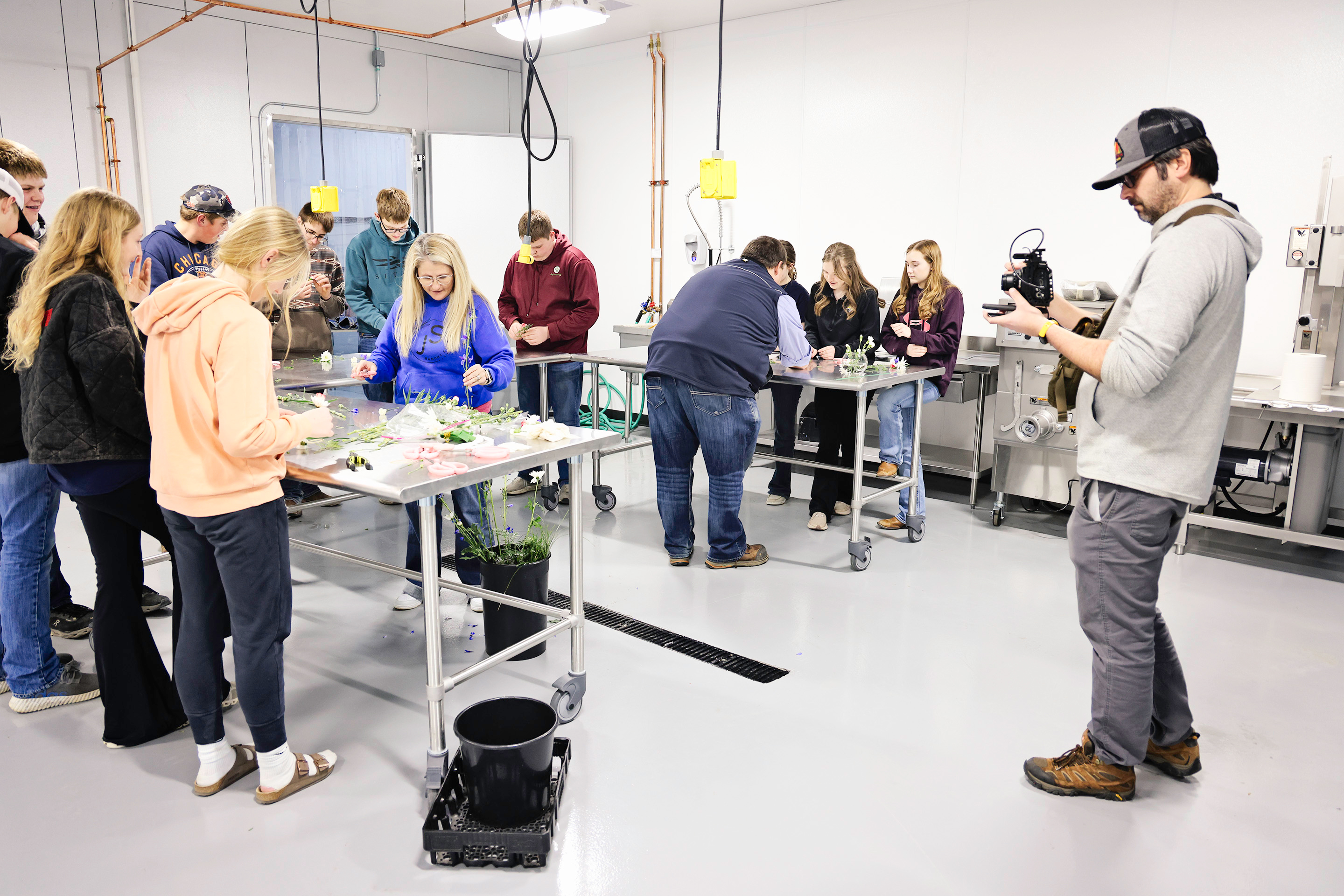
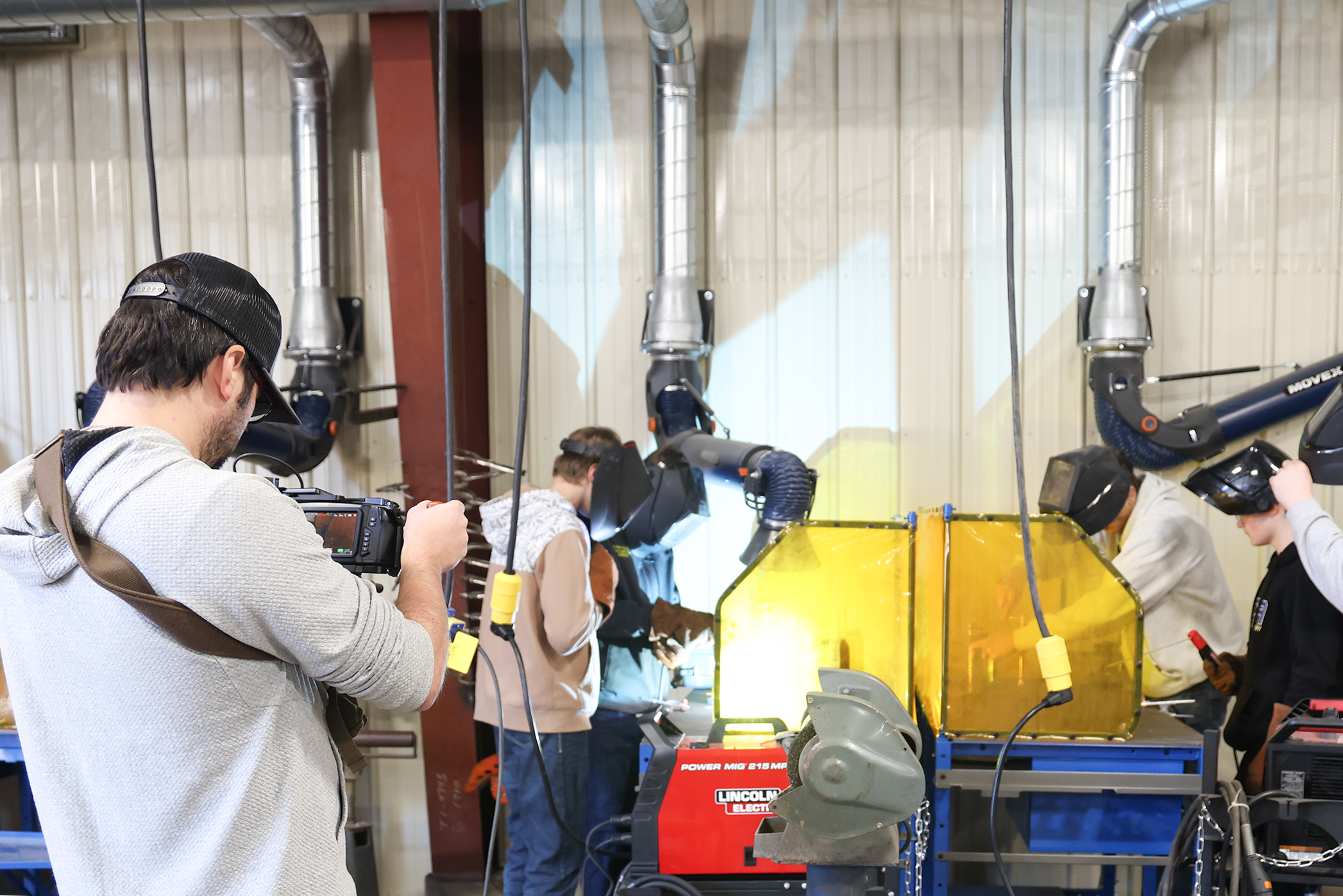
While in Wessington Springs, Hanson and Roti spent much of a day documenting activities within the local FFA chapter.
The crew filmed Duxbury teaching in the agriculture classroom, students welding and woodworking in the shop, and an FFA chapter meeting. Several students also delivered the FFA Creed for the camera, an iconic part of the organization’s tradition.
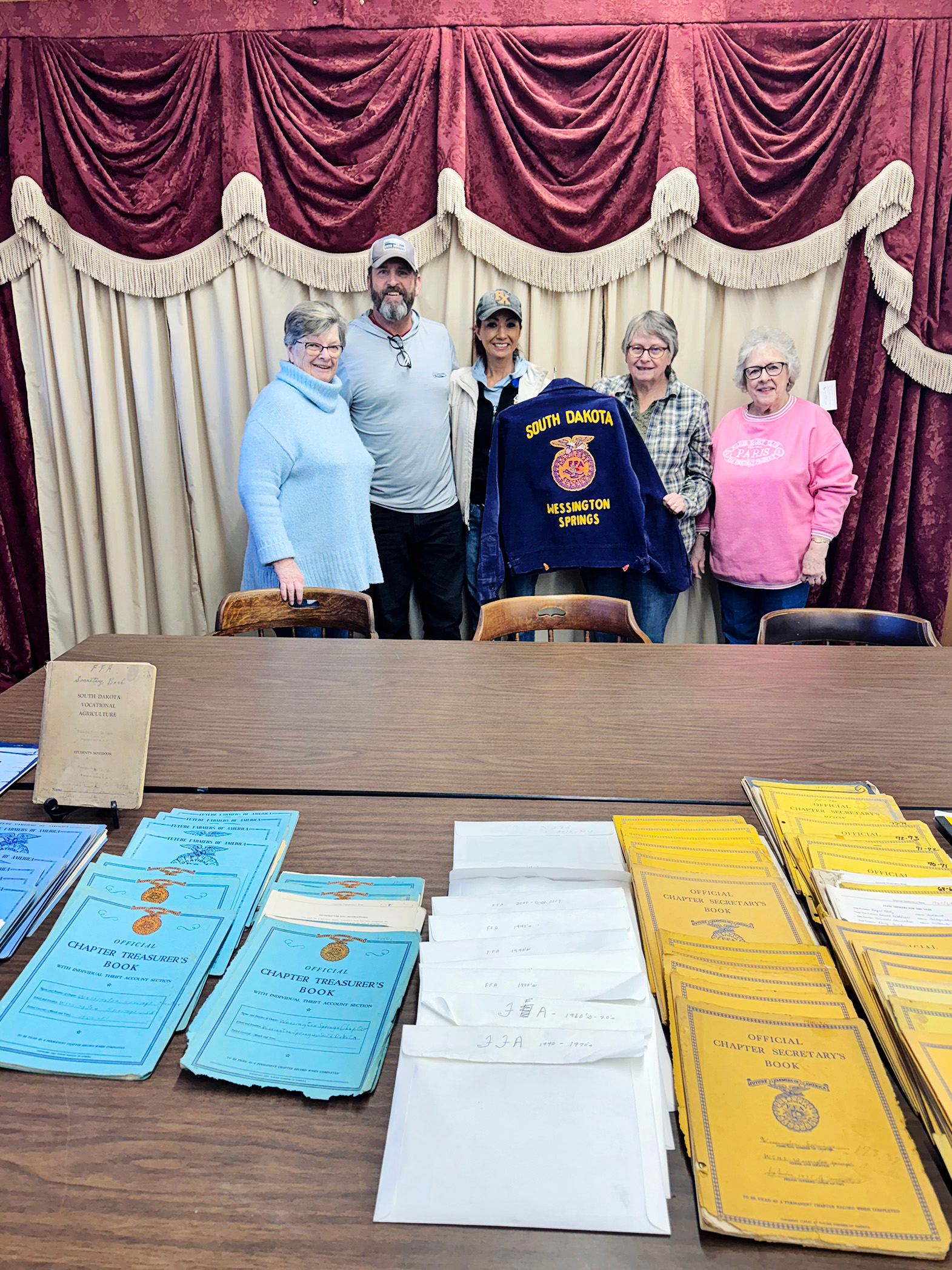
“We got to capture so many different parts of what a day in the life of an FFA chapter looks like,” Roti said. “All chapters are unique, but Wessington Springs gave us a chance to see so many aspects of the program in one place.” In addition to classroom footage, the team gathered historical material for the project. Duxbury connected the filmmakers with volunteers at the Jerauld County Pioneer Museum, where they were able to scan historic photographs, newspaper clippings and record books documenting the chapter’s past.
The Wessington Springs FFA scrapbook also provided valuable material for the project.
A Personal Connection to FFA
For Roti, the project is also a personal one.
A native of Newell, she was an FFA member in high school and later served as the South Dakota State FFA Reporter during the 1998–99 school year. Her experiences in the organization helped guide her career path into agricultural journalism.
“I actually competed in the Creed speaking contest,” she said. “A local journalist interviewed me and asked what I wanted to do someday. I said I wanted to be a journalist, and they told me there was something called agricultural journalism.”
Roti later attended South Dakota State University and has worked in the field ever since.
Because of that background, she said the documentary represents a full-circle moment.
“FFA had a huge impact on my life, so it’s really special to get to help tell its story,” she said.
A Story Bigger Than Agriculture
While the organization is rooted in agriculture education, Roti said the documentary will highlight the broader role FFA plays in South Dakota communities.
“FFA impacts farmers, ranchers and agribusiness, but it also shapes leaders,” she said. “So many legislators, city council members, county commissioners and community volunteers in South Dakota started in FFA.”
Today the organization continues to grow across the state. Roti noted that there are now more FFA chapters in South Dakota than when she was a student member.
“It’s one of the few organizations that’s more than 100 years old and actually larger today than it was decades ago,” she said.
Preserving FFA History
In addition to producing the documentary, the project is helping preserve historical material connected to FFA in South Dakota.
Many photos and documents collected during the project, including those scanned in Wessington Springs, will eventually be archived at the South Dakota Agricultural Heritage Museum.
The museum will preserve the materials so they can be accessed by future researchers, students and historians.
Roti said the documentary itself will only be able to include a small portion of the material gathered.
“The challenge is the documentary will only be about 30 minutes long,” she said. “But we’ll be able to show many more stories through photos and historical materials.”
How the Public Can Help Organizers are asking the public to share historic photos or materials related to FFA in South Dakota.
Anyone with photographs, scrapbooks or other items related to FFA history can text Lura Roti at 605-695-5872.
Another centennial project underway involves collecting an FFA jacket from every chapter in South Dakota, both active chapters and those that no longer exist, for a statewide exhibit. Jackets will be returned to their owners after the display.
Anyone willing to loan a jacket can contact:
• Terry Rieckman – terry. rieckman@k12.sd.us
• Fred Zenk – fred.zenk@k12.sd.us Filming for the documentary will continue at FFA events across the state over the next two years, with the finished film scheduled to debut at the 2028 South Dakota FFA Convention.