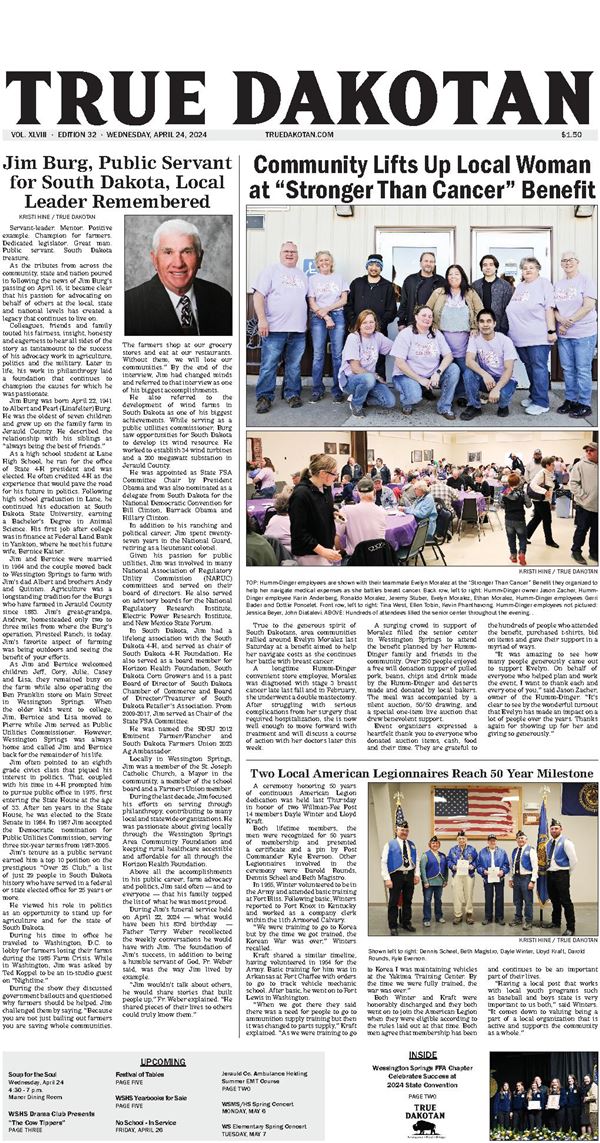


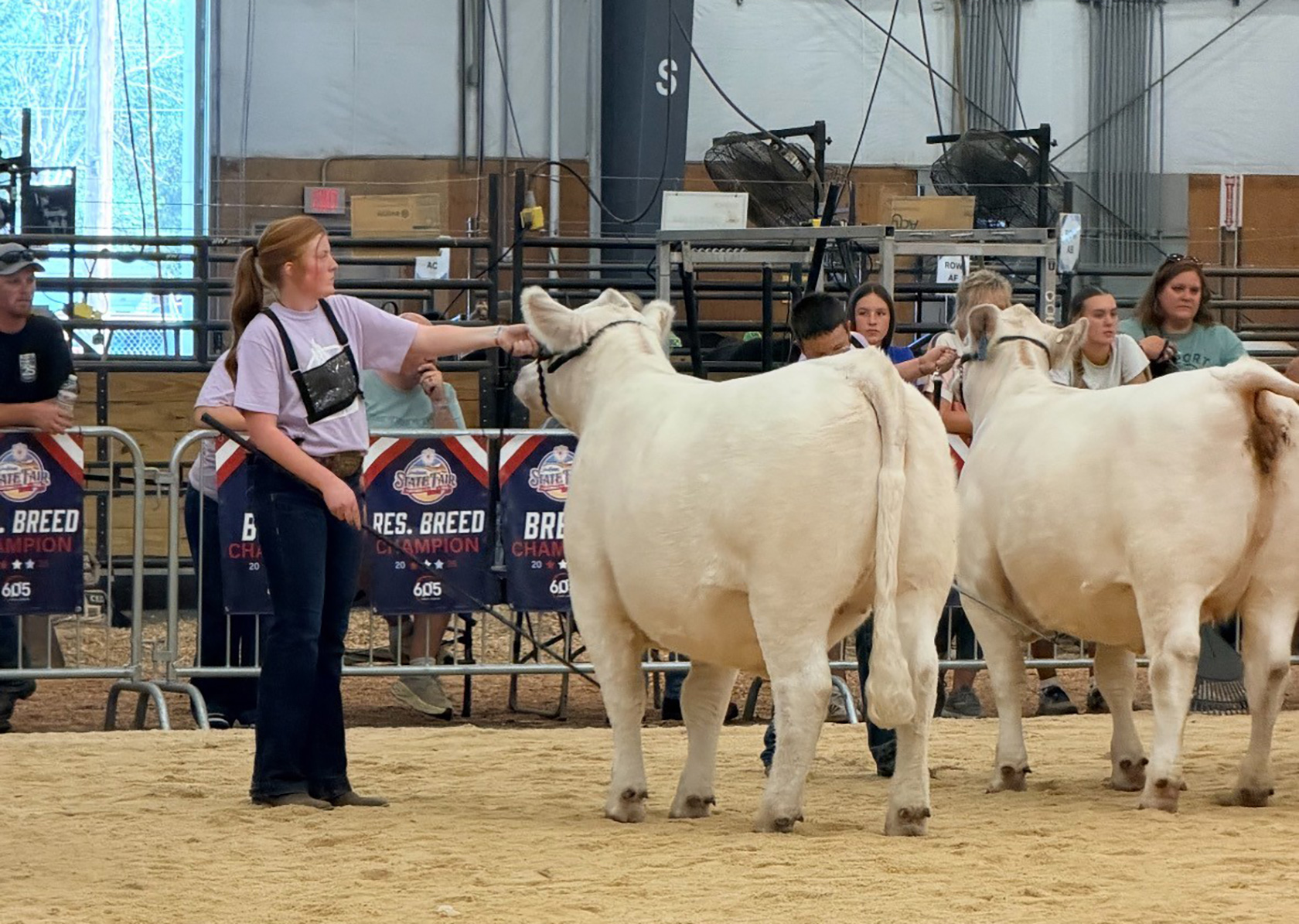
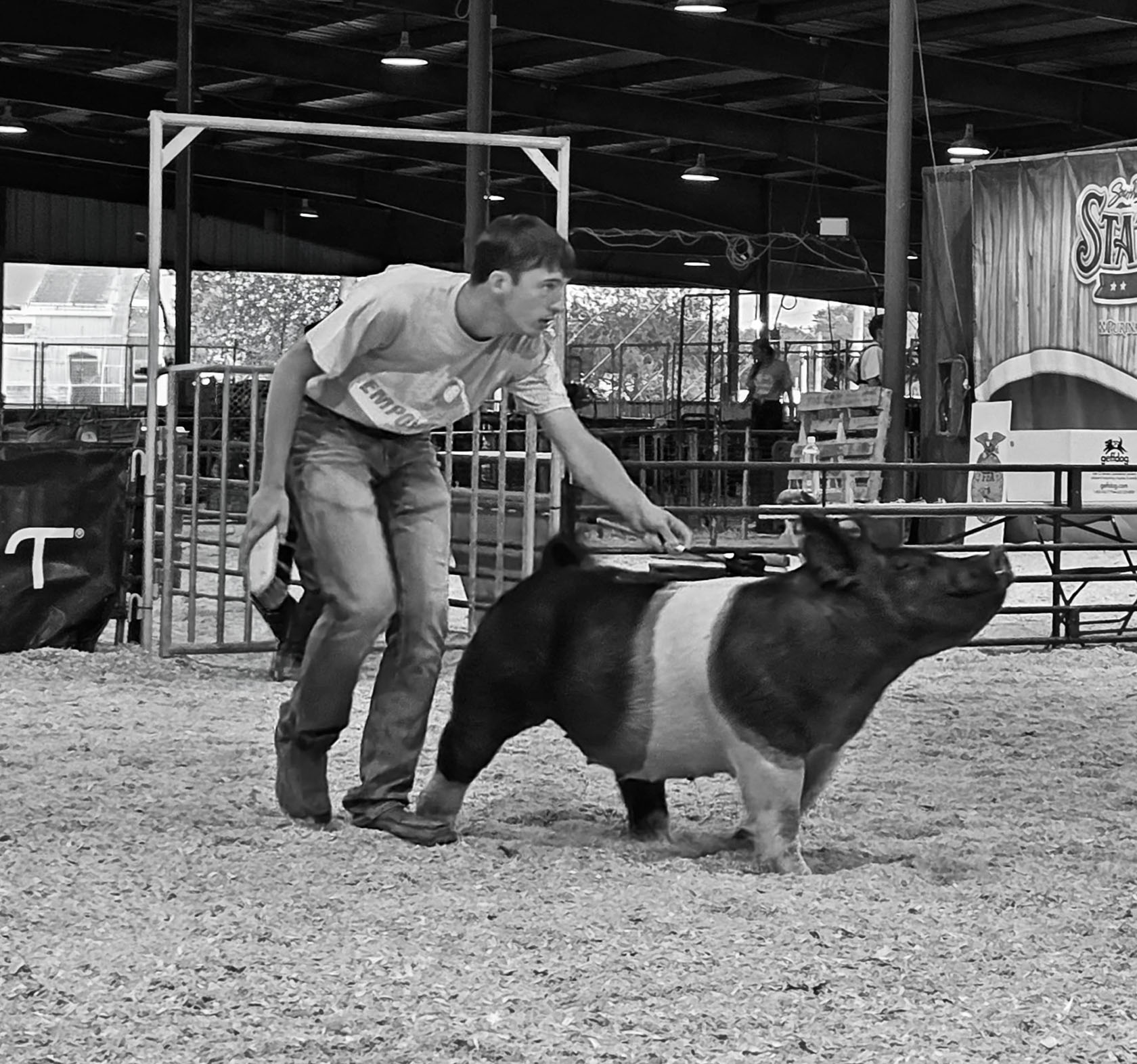

Students from the Wessington Springs School District participated in the South Dakota State Fair in Huron Sept. 2-7, but their work began months before they entered the show ring.
Teagan Scheel and Brooklyn Caffee spent much of the spring and summer preparing their animals. After selecting animals in the spring, they spent the summer feeding, exercising, washing and working with them so they became comfortable with their handlers.
Some days, they can spend as many as eight hours working with their animals. Mornings may begin around 6:30 a.m. with feeding, followed by walking, washing and other preparations. During hot weather, Scheel and Caffee also have to plan their schedules around the heat to keep their animals cool and healthy.
Both said showing livestock requires intensity and dedication. Putting in only a small amount of effort, they explained, does not lead to success. Working with an animal requires patience and consistency.
Once they enter the ring, confidence also becomes important. Exhibitors must know where the judge is, listen carefully and present both themselves and their animals to the best of their ability.
Goats and sheep are positioned for the judge, while pigs are handled differently because they are not shown with a halter. Instead, exhibitors guide them around the ring.
Even after months of preparation, entering the show ring can still bring some nerves.
“You start out nervous, but the feelings go away,” Caffee said.
Getting animals ready to compete also varies by species. Goats and sheep are fitted and clipped to improve their appearance and profile. Pigs are carefully prepared to make their coloring more defined. Cattle require frequent washing, rinsing and blow drying, along with additional fitting before a show to present their hair and body shape properly.
Show days start early, often around 6 a.m., when exhibitors feed their animals and begin final preparations. Animals are washed, blow dried and fitted before entering their classes. There may be downtime between classes, but exhibitors have to remain ready for their next trip into the ring.
And the work doesn’t end when judging is over.
Scheel and Caffee still have to clean their animals, remove products such as fitting adhesive, cool them down and make sure they are eating and drinking. Then comes packing equipment, emptying the trailer and returning home with the animals.
For some exhibitors, the end of the fair also means saying goodbye to an animal. Some are sold, while others return to breeding programs or move on to another show.
After months of work, early mornings and long days, the State Fair offers students more than a chance to earn a place in the show ring. For Scheel and Caffee, the work leading up to the fair was as much a part of the experience as what happened once they stepped into the ring.