


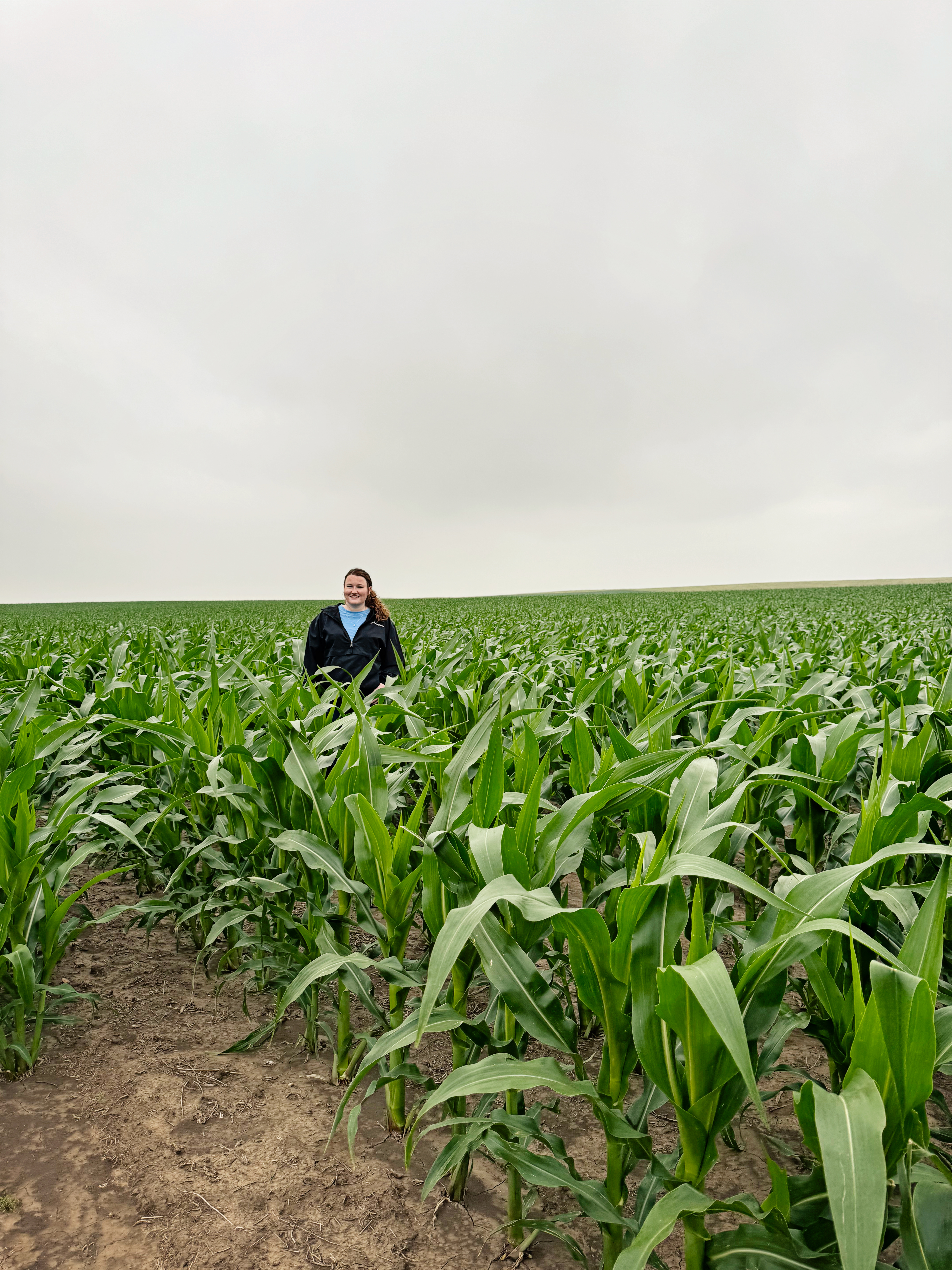
The standard “kneehigh by the Fourth of July” doesn’t necessarily apply in today’s farming measurements — drastic improvements in drought and pest resistant crops along with modern practice allow corn plant growth to rapidly take off once temperatures rise and the right amount of moisture is available. Present day farmers in South Dakota also plant earlier than previous generations because of improved plant capabilities. These improvements allow them to use seed with longer maturity dates providing the potential for higher yields, plus producers can control weeds with new technology.
However, the one thing that technological advancements can’t improve is the weather. While droughts such as 1976, 2017 and 2022’s cannot be controlled, neither can the extreme rainfall and flooding seen throughout the area so far this year. While green lush grass can be seen for miles across the area due to the excessive rainfall seen earlier this year, it has also prevented many farmers in the area from getting their crops in the ground on time. Producers that were able to plant on time have seen incredible results in their crop thus far.
This year, during the prime planting months of May and June, Jerauld County and the surrounding area collected rain totals that haven’t been experienced since 2019. In May, the area experienced approximately 2.72” of rain, a little under the normal accumulation of 3.68.” However, during the month of June, much of the state of South Dakota experienced severe flooding. While the Jerauld County area wasn’t necessarily submerged in water, it still received a whopping 6.56” of rain which is almost double the normal accumulation of 3.83.”
The surplus of precipitation so far in 2024 will have both positive and negative effects on area crops. Not only will it affect yields, the amount of acreage utilized for production is also a real concern due to the potential for a large decrease in corn supply - equivalent to a major drought due to preventative planting and acreage switching. Much of the southeastern part of South Dakota experienced heavy flooding which resulted in tens of thousands of acres worth of crop to be drowned out. However, according to the National Agricultural Statistic Service, it has been recorded that 100% of corn crop has emerged with 21% being in fair condition and 61% being in good condition.
Depending on the area in which you live, you may experience corn that is “knee-high by the Fourth of July,” or even taller. Yet still, many areas in the state will not get to experience this due to the amount of precipitation preventing timely planting.