

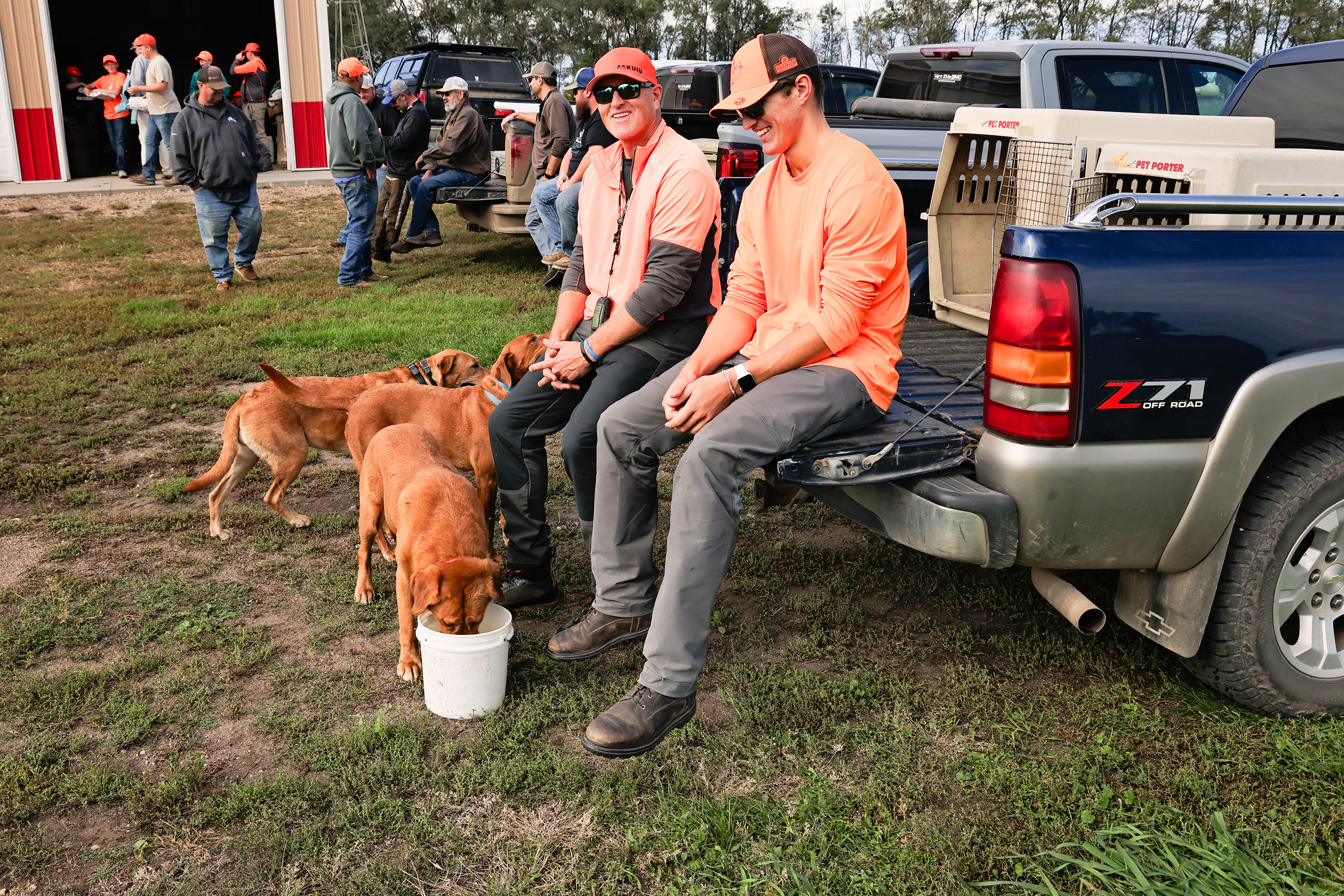
Proper hydration goes hand-in-hand with good nutrition in regard to a hardworking bird dog’s performance in the field. Active dogs require water, especially during exercise, to work effectively. Mild dehydration in your dog can reduce endurance and strength, especially in very warm or cold weather conditions. Be sure to carry water for your dog every time you go to the field.
Water plays an important role in thermoregulation. Exercise is a heat-producing activity, and dogs must be well-hydrated to respond to increased heat production, particularly when exposed to extreme temperatures and humidity. Water helps cool the body’s core temperature. Mild dehydration, even as little as 1 percent, can make it difficult for your dog to cool down after a day afield. Water also helps remove the byproducts of energy metabolism, which also impact endurance and performance.
An overworked dog runs the risk of heat stress and dehydration. Because dogs don’t sweat, except through the pads of their paws, their primary ways to eliminate body heat are through panting and moisture evaporation through the mouth. This also results in a significant way to lose body water. A dog’s most significant loss of body water during prolonged activity is simply through breathing, followed closely by an increase in urine production.
Keep your dog hydrated by following these tips:
• Offer small amounts of water every 15 to 20 minutes when possible, using a squirt bottle to shoot water into the dog’s mouth.
• Bait water with kibble or chicken broth to boost consumption.
• Wait until your dog’s panting slows after exercise before giving large quantities of water.
• Never give ice-cold water, as it may cool the dog too quickly and lead to other health problems.
• Monitor a hardworking dog for signs of heat stress and dehydration, including shade seeking, lethargy, heavy panting, and lack of coordination.Feed your dog once a day, taking advantage of the opportunity to hydrate by adding warm water to your dog’s food bowl. Be sure to allow the dog to cool down before feeding.