


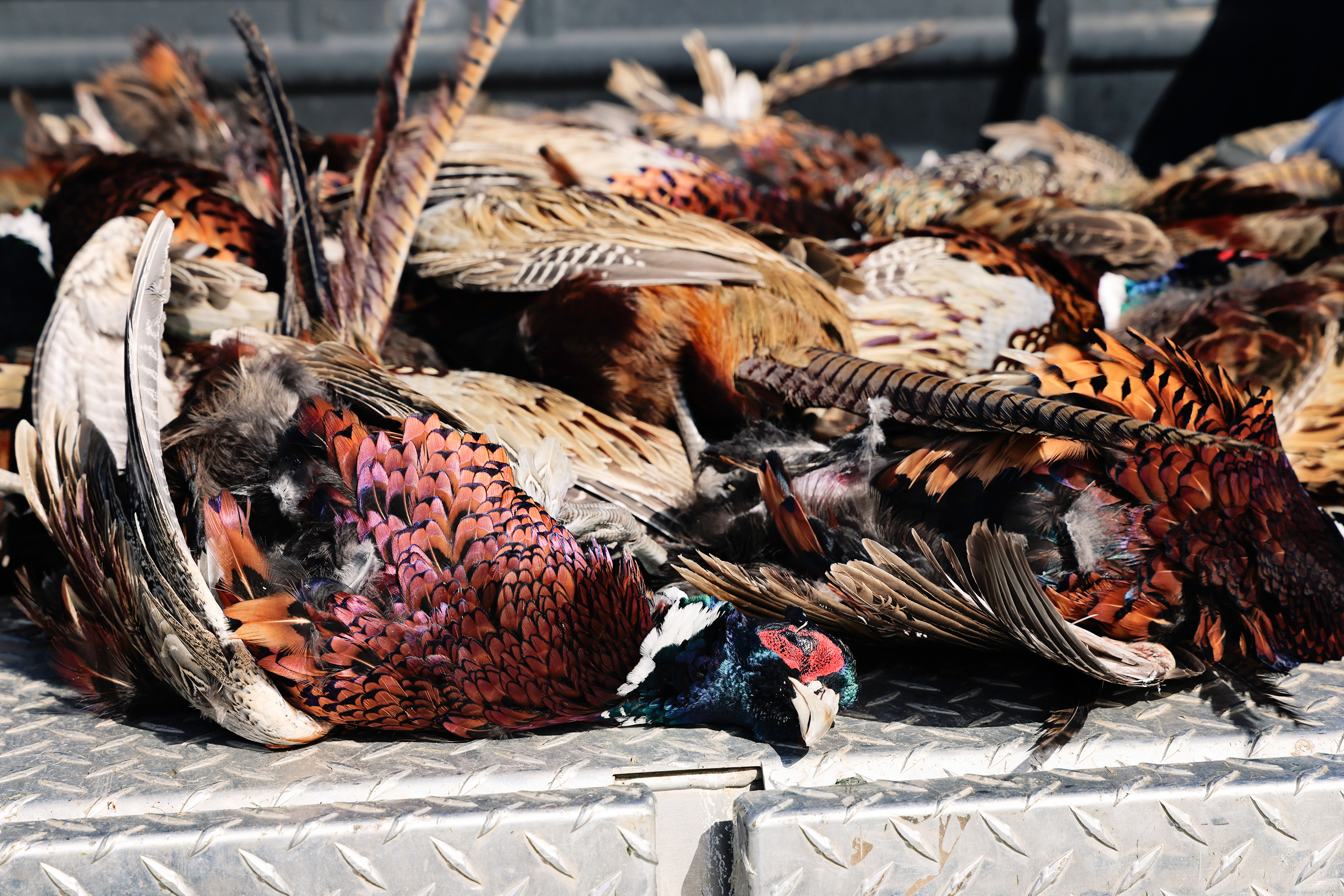
Fall is here, and hunters are taking to the fields! If you are a hunter, one could argue that there is no better time of year. South Dakota conservation officers are also gearing up to ensure our state maintains its plentiful wildlife populations and is a safe place to recreate.
As you get ready for the season, we have a few transportation regulations that are commonly misunderstood and also discuss the reasons they are in place.
Game bird transportation is one of those areas that seems to always be in question. Conservation officers answer countless phone calls from hunters wanting to stay on the right side of the law. The number one question is, “How do I transport my pheasants or small game legally?"
These regulations can be found on page 42 in the 2026 South Dakota GF&P Hunting Handbook for those who want to learn more. The answer: Unless processed at a wildlife processing facility, pheasants and grouse must have at least one of the following attached to the carcass: the fully feathered wing, the head, or the foot. All other game birds must have a fully feathered wing or the head (feet are not permissible).
Additionally, if these birds are frozen, they shall be packaged with no more than two birds per package. Hunters must transport their own birds unless they possess a transportation permit allowing them to transport someone else's game.
These regulations were put in place, so a conservation officer or other law enforcement officer can quickly identify which species the bird is and make sure the hunter is within their daily or possession limit for each species. Most seem to understand the reason for needing a certain identifying marker on a pheasant, since only roosters can be shot, but question the reason for other small game birds.
A freshly cleaned bird is relatively easy to identify it as a grouse, pheasant, or partridge, but you take that same bird and put it in a cooler full of water for a few days, and then set them out, it makes the task of identifying them more difficult. Freezing the birds with more than two birds per package in big blocks makes it very difficult, if not impossible, to count the number of birds a hunter possesses.
Lastly, a few reminders on transporting small game birds from a processing facility. For this discussion let’s talk about pheasants as this is what we see most.
A processing facility does not need to leave any identifying markers on a bird once cleaned but must follow some guidelines once these birds leave the facility. All birds must be accompanied by a receipt bearing the name of the facility, the number and species of each bird, and the name of the owner of each bird.
Oftentimes, we see these birds being transported with no receipt or a receipt that has very general information (only a group name, missing the number of birds, etc.). Many times, we can sort through these issues, but in some cases, it can take a considerable amount of time and can delay the person transporting the birds. When picking up your birds from a processing facility, please ensure that the processing facility gives you a receipt with the proper information.
Please refer to the 2026 Hunting Handbook for all your questions and if in doubt, call a conservation officer. Good luck, be safe, and have a great fall season!