


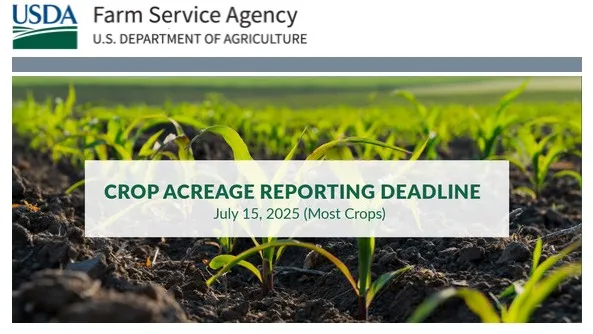
After spring planting is complete, agricultural producers should make an appointment with their local Farm Service Agency (FSA) county office to complete crop acreage reports before the applicable deadline. July 15 is a major deadline for most crops, but acreage reporting deadlines vary by county and by crop.
“To ensure receipt of important safety net, disaster assistance, conservation and crop insurance program benefits, producers should file an accurate crop acreage report for all crops and land uses, including failed acreage and prevented planted acreage before the deadline,” said FSA Administrator Bill Beam. “Once planting is complete, call your local FSA office to make an appointment to report your acres and take care of other FSA-related business during your appointment.”
How to File a Report
A crop acreage report documents a crop grown on a farm or ranch, its intended use and location. Producers can contact their FSA county office for acreage reporting deadlines that are specific to their county.
To file a crop acreage report, producers need to provide:
• Crop and crop type or variety
• Intended crop use
• Number of crop acres
• Map with approximate crop boundaries
• Planting date(s)
• Planting pattern, when applicable
• Producer share(s)
• Irrigation practice(s)
• Acreage prevented from planting, when applicable
• Other required information Acreage Reporting Details The following exceptions apply to acreage reporting dates:
• If the crop has not been planted by the acreage reporting deadline, then the acreage must be reported no later than 15 calendar days after planting is completed.
• If a producer acquires additional acreage after the acreage reporting deadline, then the acreage must be reported no later than 30 calendar days after purchase or acquiring the lease. Appropriate documentation must be provided to the county office.
Noninsured Crop Disaster Assistance Program (NAP) policy holders should note that the acreage reporting date for NAP-covered crops is the acreage reporting date or 15 calendar days before grazing or crop harvesting begins, whichever is earlier.
Producers with perennial forage crops should check with their local FSA office to see if their crops are eligible for continuous certification, which rolls the certified acreage forward each year until a change is made.
Producers should contact their local USDA Service Center for questions about acreage reporting.