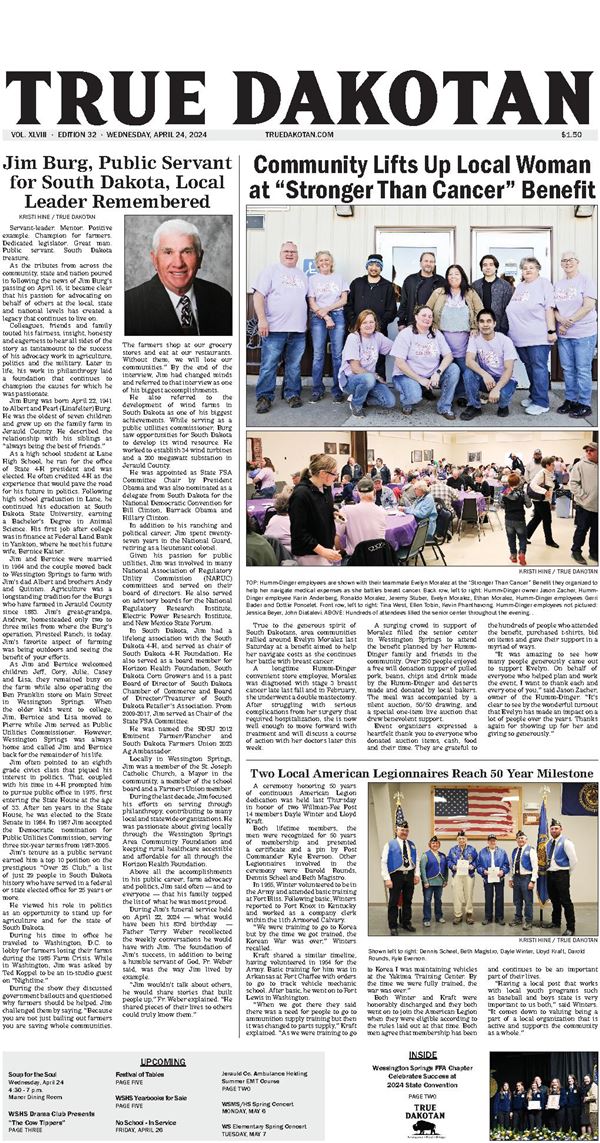



You may have noticed that the minutes for the Wessington Springs School District look different this month (they are published on PAGE SIX of this print and e-edition).
On January 17, school business manager, Janel Hettich emailed me about a discussion she and the school board had during the December 20, 2024 retreat meeting held that Friday at 1 p.m. at the elementary school library.
She explained that the discussion was regarding the way in which the minutes were sent to the paper. This month, at the request of the board, Hettich sent the minutes in a more condensed format, removing tabs and laying out the text in paragraph form.
While this indeed provides a cost savings to the school, I am concerned about how this new layout may affect the public’s right to know. I find it more difficult to read when compared to the format the True Dakotan and school district have used for decades, well before I purchased the paper from the previous owners 10 years ago.
Why are public notices important?
Publishing notices in the local newspaper informs South Dakotans in a trusted, transparent manner and creates a permanent public record. One of the great things about living in the U.S. is that our schools, city and county governments are required to keep their citizens informed about their actions. That is why the publication of these notices remain vital in our democracy.
Transparency about the workings of government proves effective in preventing corruption and misuse or abuse of tax dollars. In South Dakota, that light that shines on government often comes in three forms: open meetings, open records and public notices.
Cost implications
Prices for publishing legal notices are set by the state and takes each line, tab and column into consideration when determining a cost.
In this month’s case, after laying out the minutes in both the new and previous format, what we found is yes, the new format provided a cost savings of $214.60. Annually, that equates to approximately $2,600 in cost savings, which translates into about .06% of the school’s annual budget/means of finance. On the other hand, that loss of income equates into a 1% shortfall to the newspaper’s annual revenue.
While saving money seems to make sense at first glance, when you weigh the impact on the community – limiting transparency and the ability to keep citizens informed – the costs are minimal and worth the investment.
Hettich said she will provide information to the board at the February meeting and they will make a decision about the formatting of public notices moving forward.
With high production costs, declining readership and decreased advertising revenue, the newspaper business is in a tough spot across the U.S. — and the True Dakotan is not immune to that. While I’m hard at work creating a wide variety of digital opportunities for readers and hopeful about the future of this community newspaper as the industry continues to evolve, the loss of revenue with the new format of legal notices will undoubtedly be felt.
I encourage the board to look at what the district pays in legal notices and weigh it against the value the school is provided by the comprehensive school news coverage provided every week in the True Dakotan as you make this decision.
Editor’s note: The True Dakotan also encourages readers to weigh in on the new format of the school minutes. Email your thoughts — good, bad, indifferent — to kristi@truedakotan.com. As always, thank you for your readership.